
Environmental Impact
The MENAT region is advancing ambitious sustainability agendas through frameworks such as Saudi Arabia's Vision 2030, the UAE's Net Zero 2050, and Egypt's Vision 2030. Governments are prioritizing renewable energy, water security, circular economy solutions, and sustainable food systems. In alignment with these priorities, Savola Foods is strengthening its environmental commitment by reducing carbon emissions, enhancing water stewardship, promoting circular packaging, embedding responsible sourcing, and fostering community partnerships. Through these actions, Savola Foods contributes to regional resilience and positions itself as a trusted partner in shaping a low-carbon, resource-efficient future for the MENAT region.
GHG Reduction
Landfill Reduction
Solar Power at GFI OU
Water Reduction
Co-product Recycle
Tree Planting in Egypt
Climate Change
To SFC: Climate change presents critical challenges to Savola Foods Company and the communities we serve, especially within the food sectors essential to our business. It affects the availability and quality of raw materials, disrupts supply chains through unpredictable weather, and puts pressure on vital water resources. In alignment with Saudi Arabia’s Vision 2030, we are integrating sustainable practices across our operations to mitigate climate risks, boost efficiency, and ensure long-term resilience.
To the World: Tackling climate change is not only vital for our business, but it is also essential for global food security, public health, and environmental stability. Through climate-conscious business models and by decoupling growth from emissions, we support a more sustainable future and help advance Saudi Arabia’s environmental goals on the global stage.


Progress
Between 2019 and 2023, Savola Foods reduced its total Scope 1 and 2 GHG emissions by 15%, cutting 134,425 metric tons of CO₂e. This achievement reflects our commitment to energy efficiency and responsible environmental management.
Photovoltaic Panels for Solar Energy at Our Main Bayara Production Facility
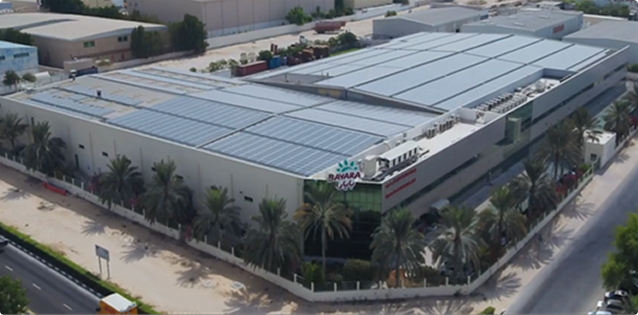
The roof of Bayara’s main production facility in Dubai Investments Park (DIP) now carries more than 3,700 photovoltaic (PV) solar panels. They cover an area of ±7,000m2 approximately the same size as the surfaces of 27 tennis courts. These solar panels have a capacity of 1.4 megawatts-peak (MWp) and generate more than 2.2 gigawatt-hours (GWh) of renewable energy every year. In addition to providing nearly 65% of the plant’s electricity needs for production, an electric vehicle (EV) charger was installed in the production facility’s parking lot, to provide solar energy to charge Bayara employees’ electric vehicles. This solar solution enables Bayara and therefore SFC to demonstrate our commitment to sustainability through an estimated reduction of nearly 1,000 MTs of CO2 emissions per year: the equivalent of planting over 25,000 trees.
Water Stewardship
To SFC: Water is a critical resource for our operations. At Savola Foods Company, we are focused on using water efficiently across all operating units. By 2025, we will conduct a water stress analysis that goes beyond our direct operations, extending to the countries where we source our raw materials.
To the World: To the World: Climate change and other pressures are increasingly affecting both the supply and quality of water. Communities around the globe are experiencing water scarcity, while ecosystems are under threat. Businesses have a vital role to play in addressing these challenges by leveraging expertise, innovation, and responsible practices.

Progress
Between 2022 and 2023, Savola Foods saved 20,000 m³ of water through efficiency measures such as equipment upgrades, leak detection, and partial recycling. We source water through approved methods based on location and treat any industrial wastewater before discharge, in line with environmental regulations.
Circular Packaging
To SFC: Savola Foods Company utilizes innovative and diverse packaging solutions to ensure the safe and high-quality delivery of products to customers and consumers. By adopting sustainable design practices, packaging can play a crucial role in developing a circular value chain and reducing greenhouse gas emissions. SFC’s vision for sustainable packaging is to create a future where packaging is fully recyclable, reusable, and never becomes waste.
To the World: Improper disposal of packaging can result in waste accumulating in marine environments and on land, posing significant risks to both human and environmental health. Addressing this pressing global challenge demands a fundamental shift toward sustainable packaging solutions. This requires collaboration across multiple stakeholders and active partnerships throughout the value chain to deliver products responsibly and minimize environmental impact.
We are committed to reducing plastic waste by developing biodegradable packaging. By transitioning over 500,000 kg of conventional plastics to sustainable alternatives, we ensure our packaging remains safe, functional, and environmentally responsible.
Discover our packaging innovations.

Progress
The successful development and launch of our biodegradable packaging initiative has transitioned over 500,000 kg from conventional to biodegradable plastics.
Waste and the Circular
Economy
Economy
To SFC: Savola Foods Company adopts innovative, diverse packaging solutions to ensure product safety and quality. Sustainable design is central to our strategy, enabling us to reduce emissions and build a circular value chain. Our vision is clear: packaging should be fully recyclable, reusable, and never end up as waste.
To the World: Improper disposal of packaging threatens ecosystems and public health. Tackling this global challenge requires systemic change from sustainable material choices to active partnerships across the value chain.
Discover our packaging innovations.
Progress
The successful development and launch of our biodegradable packaging initiative has transitioned over 500,000 kg from conventional to biodegradable plastics.
Renewable Energy
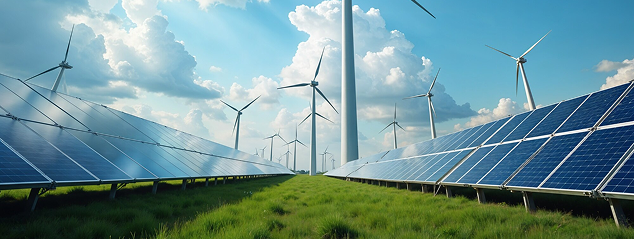
To SFC: Producing and packing our products relies on energy sources such as electricity and fuels like natural gas and diesel. Transitioning to renewable energy is a critical step toward achieving our greenhouse gas (GHG) reduction targets by 2030. Additionally, our stakeholders increasingly expect us to adopt renewable energy solutions and reduce overall energy consumption to build a low-carbon value chain that aligns with global sustainability goals
To the World: The global economy relies on energy, yet traditional fossil fuels are major contributors to climate change and environmental degradation. There is growing pressure on governments and large corporations to take decisive action and demonstrate leadership in limiting global warming to 1.5 degrees Celsius, fostering a transition toward sustainable and cleaner energy sources.
We have installed over 3,700 photovoltaic solar panels at our Bayara production facility, covering an area equivalent to 27 tennis courts. This system generates over 2.2 GWh of clean energy annually, powering 65% of the plant’s electricity needs and reducing CO₂ emissions by 1,000 MT per year.
Read more about our energy transition.
Looking Forward
Short-term (2024 to 2025)
study the feasibility in terms of which operating units (OUs) are able to use photovoltaic (PV) and wind turbine and renewable energy
Medium-term (2025 to 2027)
study the feasibility in terms of which operating units (OUs) are able to use photovoltaic (PV) and wind turbine and renewable energy
Long-term (2028 and beyond)
study the feasibility in terms of which operating units (OUs) are able to use photovoltaic (PV) and wind turbine and renewable energy